
Why Agricultural Technology Is Becoming a New Investment Theme in the U.S.
Anúncios
Agriculture has always played a central role in the American economy, but the way food is produced is changing rapidly. Farmers are increasingly using artificial intelligence, robotics, satellite imagery, precision equipment, and advanced biological tools to improve productivity and manage increasingly complex operations. As these technologies move from research laboratories into working farms, agricultural technology is attracting renewed attention from investors across the United States.
Often called AgTech, agricultural technology includes a wide range of products and services designed to improve farming, livestock management, crop development, irrigation, and food supply chains. Some innovations help farmers apply fertilizer more accurately, while others automate repetitive tasks, detect crop diseases earlier, or use data to guide decisions about planting and harvesting.
The investment case is connected to practical economic pressures. Farmers face changing input costs, labor constraints, unpredictable weather, and the need to maintain productive operations. Technology companies that can demonstrate measurable savings or more reliable production may find opportunities in this environment.
Anúncios
However, growing interest does not mean every agricultural technology company is positioned for success. Startup funding has experienced significant fluctuations, and investors are becoming more selective about business models, costs, and evidence of commercial demand. For investors, understanding this distinction is essential to evaluating the sector.
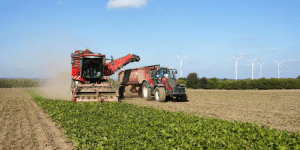
In This Comprehensive Guide, Readers Will Learn:
- Why agricultural technology is attracting attention from U.S. investors.
- Which AgTech segments are developing new commercial opportunities.
- How artificial intelligence, robotics, and precision agriculture are changing farming.
- Why agricultural biotechnology remains an important area of innovation.
- What recent investment trends reveal about the sector.
- Which risks could limit the growth of agricultural technology companies.
- How investors can evaluate AgTech businesses and identify meaningful industry developments.
What Is Driving Interest in Agricultural Technology?
Rising production costs are encouraging efficiency
For farmers, the economic benefits of technology often begin with a straightforward question: Can this tool help reduce costs or improve the value of the harvest?
Anúncios
The U.S. Department of Agriculture’s Economic Research Service projected total farm production expenses of approximately $492.8 billion in 2026, an increase of 4.5% from the 2025 estimate. The forecast also identified higher spending on areas including fertilizer, fuel, and livestock purchases. These pressures help explain why technologies that improve resource efficiency are attracting attention.
Precision equipment can help farmers apply fertilizer only where it is needed, identify areas requiring additional irrigation, or reduce unnecessary passes across a field. Even modest improvements may have a meaningful financial impact when applied across large operations.
For technology providers, the opportunity is to demonstrate that the cost of adopting a new system is justified by measurable benefits. A product that reduces waste, saves labor, or improves crop management may offer a stronger commercial proposition than one that delivers impressive technical results without a clear financial return.
Labor challenges are increasing interest in automation
Agriculture includes many repetitive and time-sensitive tasks, from monitoring crops to handling livestock and harvesting produce. Finding enough workers with the right skills can be difficult, particularly during short planting and harvesting windows.
Robotics and automation may help farms complete some of these tasks with fewer manual interventions. Autonomous tractors, robotic milking systems, automated sorting equipment, and targeted weed-control machines are examples of technologies designed to support farm operations.
The appeal is not necessarily eliminating human labor. In many cases, automation is intended to help existing workers cover more ground, perform physically demanding tasks more efficiently, or concentrate on work that requires judgment and experience.
Investors are paying attention to companies that can translate these needs into reliable products that operate under real agricultural conditions.
Climate variability is making better information more valuable
Weather patterns, droughts, floods, and shifting pest pressures can affect agricultural production. Although technology cannot eliminate these risks, it can help farmers make decisions with more timely and detailed information.
Sensors, satellite imagery, weather models, and farm management software can help producers monitor soil moisture, track crop development, and identify potential problems earlier. This information may support more targeted irrigation, better planting decisions, and faster responses to disease or pest outbreaks.
The investment opportunity lies in turning large volumes of agricultural data into tools that farmers can actually use. Companies need more than sophisticated analytics: they must deliver information that supports decisions and fits naturally into existing farm workflows.
The Main Agricultural Technology Segments Attracting Attention
Agricultural technology is not one single industry. It includes several distinct markets, each with different costs, development timelines, and revenue opportunities.
1. Precision agriculture and smart equipment
<AsyncImage query=”precision agriculture tractor GPS auto steering field farm technology” aspectRatio=”16:9″ width=”100%” />
Precision agriculture uses location data, sensors, mapping, and digital tools to manage fields more precisely. Instead of treating an entire farm as if every area has identical needs, farmers can adjust decisions based on local conditions.
Examples include GPS-guided tractors, yield monitors, variable-rate fertilizer application, soil mapping, and satellite-based crop monitoring.
The technology is already established in parts of the U.S. farming sector. USDA data for 2023 showed that guidance autosteering systems were used by 52% of midsize crop-producing farms and 70% of large-scale crop-producing farms. Adoption varied by farm size and technology type, with smaller family farms generally reporting lower adoption rates.
For investors, this creates two different opportunities. Established equipment manufacturers can incorporate additional software and automation into products farmers already use. Meanwhile, smaller technology companies can develop specialized sensors, analytics platforms, or tools that work with existing machinery.
The key question is whether a product delivers enough value to justify its purchase price, installation, maintenance, and training requirements.
2. Artificial intelligence and farm management software
<AsyncImage query=”farmer using tablet crop monitoring digital agriculture analytics field” aspectRatio=”16:9″ width=”100%” />
Artificial intelligence is increasingly being used to analyze images, identify crop stress, forecast potential problems, and organize farm data.
For example, computer vision systems can examine images captured by drones or field equipment to help identify weeds or signs of disease. Predictive models may combine weather forecasts, soil information, and historical yields to support decisions about planting, irrigation, or harvesting.
Farm management software can also bring information from multiple sources into one system. This may help farmers compare field performance, track input use, maintain records, and plan equipment operations.
These applications may be attractive to investors because software can sometimes be sold through recurring subscriptions rather than relying entirely on one-time equipment purchases. However, recurring revenue is not automatic. Companies must demonstrate that customers continue using the product and are willing to pay for it over time.
Data quality, connectivity, integration with existing equipment, and the reliability of AI recommendations remain important considerations.
3. Robotics and autonomous machinery
<AsyncImage query=”agricultural field robot autonomous weeding machine crops modern farm” aspectRatio=”16:9″ width=”100%” />
Agricultural robotics is another area receiving investor attention. Autonomous or semi-autonomous machines can support tasks such as crop monitoring, targeted spraying, weed control, material handling, and certain livestock operations.
These products may be particularly useful when work is repetitive, physically demanding, or required within a narrow time window.
Robotics companies, however, face significant technical and commercial challenges. Farm equipment must withstand dust, mud, moisture, uneven terrain, and changing weather. Machines must also work safely around people, animals, and other equipment.
In addition, agricultural customers may be reluctant to purchase expensive technology unless it has demonstrated reliability across multiple seasons.
Investors therefore need to distinguish between a promising prototype and a commercially proven product. Demonstrations, pilot projects, customer retention, maintenance costs, and the ability to manufacture equipment at scale all matter.
4. Agricultural biotechnology and improved crop varieties
Agricultural biotechnology uses biological and genetic tools to develop crop varieties with particular characteristics, such as resistance to pests, tolerance of certain growing conditions, or improved productivity.
This field includes established genetically engineered crops as well as newer breeding methods, biological crop inputs, and research into plant traits.
According to the USDA’s September 2026 report on biotechnology in U.S. crop production, genetically engineered varieties have accounted for more than 90% of U.S. corn, soybean, and cotton acreage since 2023. This widespread adoption illustrates the established role of biotechnology in major American field crops.
For investors, the sector offers exposure to research-driven businesses with potential applications across large agricultural markets. Companies may develop seeds, biological products, crop-protection solutions, or technologies that help accelerate breeding and discovery.
However, biotechnology often involves long development timelines, regulatory requirements, field testing, and substantial research expenses. A promising scientific result does not guarantee a commercially successful product.
Investors should consider whether a company has a credible route from research to approval, production, distribution, and adoption by farmers.
5. Water management and climate-focused technology
Water efficiency is another important area of agricultural innovation. Smart irrigation systems can use soil sensors, weather data, and automated controls to adjust watering schedules based on crop needs.
Other companies focus on monitoring soil conditions, measuring resource use, improving drainage, or helping farmers assess risks associated with changing weather.
These solutions can be particularly relevant in areas where water availability is limited or irrigation represents a substantial operating expense.
Climate-related agricultural technology can also include tools for tracking emissions, managing soil health, and documenting farming practices. However, the commercial value of these products depends on whether farmers, food companies, insurers, or other customers are willing to pay for the benefits they provide.
For investors, it is important to separate measurable operational improvements from environmental claims that may be difficult to verify.
What Recent Investment Trends Reveal About AgTech
The agricultural technology investment market has not followed a simple, uninterrupted growth trajectory. After a period of substantial venture funding earlier in the decade, investors became more cautious about high valuations, capital-intensive businesses, and startups that struggled to reach profitability.
Nevertheless, certain parts of the sector continue to attract interest.
AgFunder’s 2026 Global AgriFoodTech Investment Report estimated that global agrifood technology funding reached $16.2 billion in 2025, down approximately 3% from the previous year. Within that total, upstream businesses focused on farming, agricultural production, and biological systems attracted $9 billion, a 7% increase year over year.
These figures cover a broad global agrifood technology market, not only U.S. agricultural startups. They should therefore be interpreted as evidence of changing investment priorities rather than a direct measure of American AgTech performance.
Other industry reporting has highlighted growing interest in precision agriculture, robotics, and smart field equipment, while also describing continued funding challenges across the sector.
Taken together, these trends suggest a more selective investment environment. Investors are looking for companies that can demonstrate tangible benefits, manage costs, and build sustainable businesses rather than relying solely on the promise of future technological breakthroughs.
Why investors may prefer proven commercial applications
A technology can be impressive without being commercially viable. Agricultural businesses must sell products in an industry where purchasing decisions are closely connected to seasonal cash flow, equipment replacement cycles, commodity prices, and weather.
A product that reduces fertilizer use or labor expenses may have a more easily measured value proposition than a platform whose benefits are difficult to quantify.
This does not mean early-stage research has no investment value. It means investors need to understand the difference between the potential of an innovation and the likelihood that it will become a profitable business.
Established agricultural equipment manufacturers, specialized software providers, biotechnology businesses, and early-stage startups all offer different forms of exposure to the sector, with different levels of risk.
How Investors Can Evaluate Agricultural Technology Companies
For people researching AgTech as an investment theme, a few practical questions can help separate industry potential from company-specific performance.
Look for measurable customer benefits
Investors should examine whether a product can reduce costs, improve output, save time, lower resource consumption, or help customers manage risk.
Useful evidence may include documented field trials, customer case studies, independent testing, and repeat purchases. Claims based only on projected savings deserve closer examination.
Examine the business model
Some AgTech companies sell physical equipment, while others earn revenue from subscriptions, data services, biological products, or maintenance contracts.
Hardware businesses may face manufacturing costs, inventory requirements, and service obligations. Software companies may have lower marginal costs in some circumstances but still need to invest in product development, customer acquisition, and technical support.
Biotechnology companies may require substantial research spending before generating significant commercial revenue.
Understanding how a company earns money is essential to evaluating its long-term prospects.
Consider the economics of farm adoption
A product can be useful in theory but too expensive for many farmers to purchase. Upfront equipment costs, financing, connectivity, training, and repairs may influence adoption.
Technology companies may also need to tailor products to different farm sizes and crop types. A system that works well on a large, highly mechanized operation may not be practical for a small family farm.
Investors should examine the target customer, the expected payback period, and the financial conditions required for adoption.
Assess competition and integration
AgTech businesses often compete with established equipment manufacturers, agricultural input suppliers, and specialized software providers.
A startup may have innovative technology but struggle to distribute it, service it, or integrate it with equipment already used by farmers.
Partnerships with established agricultural companies can support distribution and product development, although they may also create dependencies or reduce a startup’s control over its market.
Pay attention to financial performance
Revenue growth alone does not establish that a business is sustainable. Investors should also examine gross margins, operating expenses, cash reserves, customer retention, debt, and the amount of additional capital the company may need.
For publicly traded companies, agricultural technology may represent only one part of a much larger business. Investors should check how much of the company’s revenue and earnings actually comes from the relevant products.
For private startups, financial information may be limited, making independent verification more difficult.
The Main Risks of Investing in AgTech
Despite the sector’s potential, agricultural technology presents several risks.
High development costs: Robotics, specialized machinery, and biotechnology can require substantial investment before reaching commercial scale.
Slow adoption: Farmers may delay purchases when commodity prices fall, financing becomes expensive, or cash flow weakens.
Seasonal revenue: Some companies experience uneven sales because equipment purchases and agricultural activities follow seasonal patterns.
Weather and commodity exposure: Agricultural conditions and crop prices can influence customers’ ability and willingness to invest in new technology.
Regulatory uncertainty: Biotechnology products, agricultural chemicals, autonomous machinery, and certain data practices may face regulatory requirements that affect development timelines and costs.
Execution risk: A company may develop effective technology but struggle with manufacturing, distribution, customer support, or profitability.
There is also a risk of assuming that the entire sector will benefit equally from technological progress. A successful innovation may create value for farmers while leaving a particular startup unable to capture enough revenue to sustain its operations.
For these reasons, AgTech should be evaluated as a diverse industry rather than a single investment opportunity.
What Could Shape Agricultural Technology Through the Rest of 2026?
Several developments may influence the sector’s direction over the coming months.
First, investors are likely to continue examining whether AI and robotics can deliver reliable results in real agricultural settings. Improvements in computer vision, autonomous navigation, and farm data integration could expand the range of tasks that technology can support.
Second, farm economics will remain important. The USDA’s September 2026 outlook projected inflation-adjusted net farm income to decline by 5.5% from 2025, even though the forecast remained above the 2006–2025 average. The outlook also projected higher total production expenses.
This environment may increase interest in tools that help producers manage costs, but it could also make expensive technology harder to purchase. The same economic pressure can create demand for efficiency while limiting the money available to pay for it.
Third, investors may continue to favor businesses with established customers, clear commercial applications, and credible paths to profitability. Companies that can show repeat purchases and reliable performance may be better positioned to attract funding than businesses relying primarily on ambitious projections.
Finally, partnerships and acquisitions could remain important ways for larger agricultural companies to expand their technological capabilities. Such deals can provide startups with access to distribution networks and established customers, although acquisition opportunities are not guaranteed.
The overall direction will depend on how effectively companies translate technological progress into products that farmers can afford and use.
Final Thoughts
Agricultural technology is becoming an important investment theme in the United States because it addresses practical challenges across one of the country’s essential industries. Precision agriculture, artificial intelligence, robotics, biotechnology, and water-management systems offer ways to improve efficiency, manage resources, and support agricultural production.
Recent funding data suggest that investor interest is becoming more selective rather than disappearing. Businesses that demonstrate measurable customer benefits and credible paths to commercial success may continue to attract attention, even as other companies face funding and profitability challenges.
For investors, the distinction between a promising industry and a promising individual company is crucial. Agricultural technology has meaningful long-term applications, but development costs, adoption barriers, competition, and farm-level financial pressures can all affect results.
The most useful way to approach AgTech is to examine each business on its own merits: what problem it solves, who pays for its solution, whether customers continue using it, and whether its financial model can support growth. As American agriculture becomes increasingly connected and data-driven, those questions will help determine which technologies move beyond experimentation and become enduring parts of the farming economy.

Emilly Correa has a degree in journalism and a postgraduate degree in Digital Marketing, specializing in Content Production for Social Media. With experience in copywriting and blog management, she combines her passion for writing with digital engagement strategies. She has worked in communications agencies and now dedicates herself to producing informative articles and trend analyses.