
HUD rental assistance cuts: what you need to know

Anúncios
HUD rental assistance cuts significantly impact low-income families by reducing their access to affordable housing, leading to increased financial stress and housing insecurity.
HUD rental assistance cuts are raising concerns across the nation. Many families depend on this support, and the recent changes might leave them searching for solutions. Let’s dive into what’s happening and how it could affect you.
Anúncios
Understanding HUD rental assistance
Understanding HUD rental assistance is crucial for many families facing housing challenges. The U.S. Department of Housing and Urban Development (HUD) provides various programs to help individuals secure affordable housing. These programs are essential for low-income families, seniors, and people with disabilities, ensuring they have a safe place to live.
What is HUD rental assistance?
HUD rental assistance refers to several federal programs designed to provide financial help to those who can’t afford housing costs. These programs typically aim to reduce the burden of housing expenses, making it easier for families to stay in their homes or find new ones.
Anúncios
Types of HUD assistance
Different types of assistance include:
- Housing Choice Voucher Program: Provides vouchers that families can use to rent in the private market.
- Public Housing: Offers rental units managed directly by local public housing agencies.
- Project-Based Rental Assistance: Ties rental assistance directly to specific housing units.
Each of these programs serves specific needs, allowing families to choose the best option according to their circumstances. It’s important to be well-informed about these choices.
Eligibility criteria
To qualify for HUD rental assistance, families usually need to meet specific income and eligibility requirements. Generally, these criteria include:
- Being a low-income household.
- Citizenship or eligible immigrant status.
- Complying with any additional local policies.
This ensures that assistance goes to those who need it the most. Knowing these requirements can help applicants prepare more effectively.
In conclusion, understanding HUD rental assistance allows families to navigate their options effectively. By knowing the different types of programs available and the eligibility criteria, families can make informed decisions that foster housing stability.
Current changes in assistance programs

Current changes in assistance programs are affecting many families who rely on support to pay their rent. These adjustments may include funding cuts, policy shifts, or the introduction of new criteria that could impact eligibility for benefits. Keeping informed about these changes is vital for those needing aid.
Overview of recent changes
Recently, HUD has implemented some significant changes that have sparked concern among housing advocates and families alike. These modifications can vary widely depending on the local housing authority and the specific program in question.
Possible consequences
There are several potential consequences of these changes. For instance:
- Reduced funding: Some programs may see budget cuts, leading to fewer resources for applicants.
- More stringent eligibility: New requirements might restrict access to assistance, making it harder for families to qualify.
- Program changes: Specific types of assistance might be altered or eliminated altogether, affecting how families receive support.
These situations could lead to increased anxiety for those who depend on the stability that housing assistance provides. Families may have to adjust their budgets or seek alternative resources if their rental assistance is reduced.
Advocacy and support
In light of these changes, many organizations are advocating for the protection and expansion of rental assistance. Advocacy efforts can include:
- Raising public awareness about the importance of rental assistance programs.
- Encouraging policy changes at the federal and local levels.
- Providing resources for families to navigate the changing landscape of assistance.
Engaging with local community groups can be beneficial for families seeking support and information. By staying connected and informed, families can better understand their options during these uncertain times.
Implications for affected families
The implications for affected families due to HUD rental assistance cuts can be quite serious. Many families rely on these programs to afford their housing costs, and any reductions in assistance can strain their financial stability significantly. Understanding these implications is essential for those directly impacted.
Financial stress and housing insecurity
With reduced assistance, families may experience increased financial stress. This can lead to difficult choices, such as:
- Cutting back on essentials: Families may have to limit spending on food, clothing, and healthcare.
- Risk of eviction: Higher rent obligations can push families closer to eviction if they cannot make ends meet.
- Increased reliance on credit: Families might resort to using credit cards or loans to cover housing expenses, leading to debt.
These situations can create a cycle of instability for families, making it challenging to maintain a safe and secure living environment.
Impact on children and education
For families with children, the implications extend beyond finances. Housing instability can negatively affect children’s well-being and education. When families move frequently due to housing insecurity, children may:
- Struggle with school performance: Frequent changes in schools can disrupt learning.
- Experience emotional distress: The stress of moving and uncertainty can lead to anxiety and behavioral issues.
- Miss out on social connections: Building friendships can be difficult when children are moved around.
It’s crucial to consider how these factors intertwine with the overall health of families as they navigate the challenges presented by HUD rental assistance cuts.
Community and support resources
Fortunately, many communities offer support resources for families facing these hardships. Local organizations might provide:
- Emergency financial assistance: Help with rent or utilities during tough times.
- Housing counseling services: Guidance on finding affordable housing options and understanding tenant rights.
- Food assistance programs: Resources to help families access food during financial difficulties.
Connecting with these resources can provide much-needed support for families struggling due to reductions in rental assistance.
Exploring alternative housing resources

Exploring alternative housing resources is essential for families affected by HUD rental assistance cuts. When traditional assistance is reduced, it’s important to know what other options are available to help secure stable housing. This knowledge can offer new pathways to affordable living situations.
Nonprofit organizations
Many nonprofit organizations work tirelessly to assist families in finding affordable housing alternatives. These organizations often provide valuable resources, such as:
- Housing programs: Various programs designed to help families find low-cost homes.
- Financial counseling: Guidance on budgeting and financial management to better handle housing costs.
- Advocacy services: Support in navigating the complexities of housing policies and rights.
By connecting with these nonprofits, families can gain access to crucial information and support networks.
Public housing options
Another option to consider is public housing, which provides low-income families with affordable places to live. Public housing is managed by local housing authorities and can include:
- Subsidized apartments: Rent is based on income, ensuring that costs remain manageable.
- Community resources: Many public housing developments foster community support, creating a sense of belonging.
- Additional services: Residents may have access to education and job training programs.
This form of housing assists families in achieving stability while access to resources that can lead to better opportunities.
Co-housing and shared living arrangements
Co-housing and shared living arrangements are alternative options that some families are turning to for affordable housing. These setups can be beneficial for various reasons:
- Cost-sharing: Families can split rent and utility costs, making housing more affordable.
- Community living: Living with others can foster social connections and support.
- Shared resources: Families can share amenities, reducing individual expenses.
By working together, families can create living arrangements that provide both financial relief and a supportive community environment.
In summary, exploring alternative housing resources can empower families experiencing HUD rental assistance cuts. Whether through nonprofit organizations, public housing options, or innovative co-housing strategies, there are many ways to find affordable and stable housing solutions.
Community support initiatives
Community support initiatives play a crucial role in helping families affected by HUD rental assistance cuts. These programs often serve as lifelines, providing the necessary resources and services to maintain housing stability and improve overall quality of life.
Local organizations and nonprofit programs
Many local organizations and nonprofits work collaboratively to offer support to families in need. These initiatives can include:
- Food banks: Providing essential groceries to families struggling with food insecurity.
- Financial assistance: Offering emergency funds to help cover rent or utility bills during challenging times.
- Family support services: Connecting families with counseling and guidance to enhance their well-being.
By pooling resources, these organizations increase the community’s ability to respond to the challenges posed by housing insecurity.
Volunteer programs
Volunteer programs are another vital aspect of community support. Dedicated individuals contribute their time and skills to help families facing difficulties. These programs often provide:
- Mentoring: Pairing experienced volunteers with families to guide them through challenges.
- Skill-building workshops: Teaching valuable skills like budgeting, cooking, and job readiness.
- Community events: Organizing gatherings that foster connections and build networks among families.
Volunteer support can not only provide practical assistance but also create a sense of belonging within the community.
Government initiatives
Government programs also play a significant role in providing community support. Initiatives at the local, state, and federal levels can offer various resources, including:
- Housing assistance programs: Expanding access to affordable housing resources and helping families navigate available options.
- Workforce development programs: Providing job training and employment support to help families achieve financial stability.
- Emergency assistance funds: Short-term financial aid to assist families facing immediate crises.
These government-supported initiatives are essential for families trying to navigate the complex challenges created by reductions in rental assistance.
In conclusion, community support initiatives are vital resources for families impacted by HUD rental assistance cuts. Through collaboration among local organizations, volunteers, and government programs, families can find the support they need to build a resilient future.
Advocacy for rental assistance reform
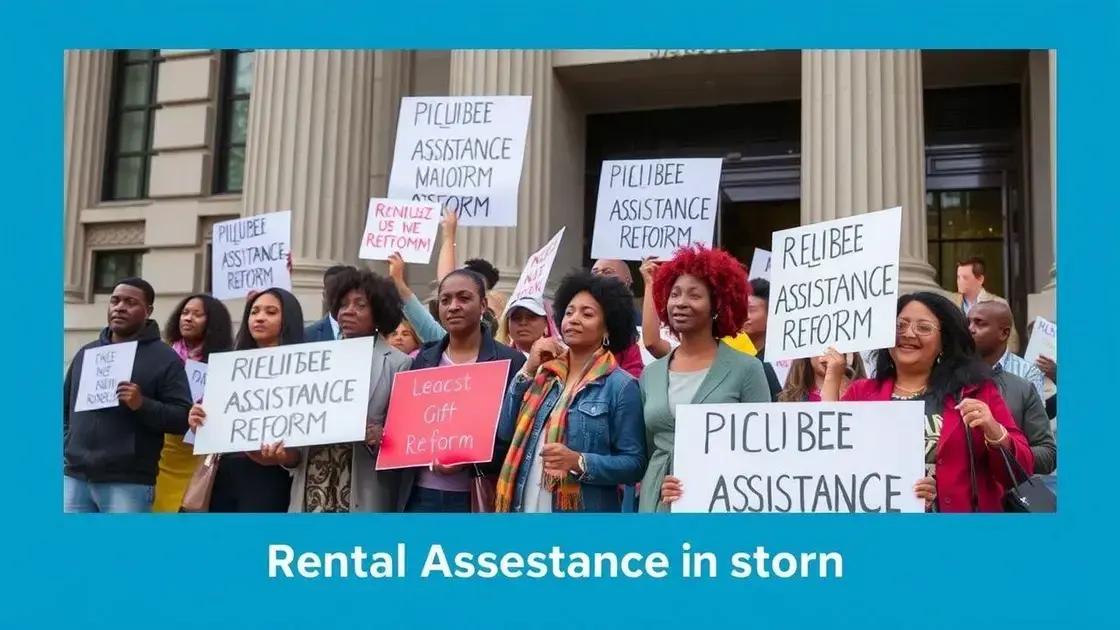
Advocacy for rental assistance reform is essential in addressing the challenges faced by families affected by HUD rental assistance cuts. These efforts aim to improve policies and secure funding to ensure that vulnerable populations have access to safe and affordable housing.
The importance of advocacy
Advocacy can significantly influence housing policies on local, state, and national levels. It brings attention to the needs of families struggling due to reduced assistance. When community members come together, they can:
- Raise awareness: Educating the public and policymakers about housing issues and their impacts.
- Mobilize support: Encouraging local organizations, advocates, and residents to join the cause.
- Influence policy changes: Driving legislation that expands or protects rental assistance programs.
When communities unite for this cause, they can create meaningful change that benefits many families.
Ways to get involved
There are several ways individuals can participate in advocacy efforts. Some effective methods include:
- Contacting representatives: Writing letters or calling local officials to express support for rental assistance funding.
- Joining advocacy groups: Connecting with organizations focused on housing reform can amplify voices and strengthen efforts.
- Participating in community events: Attending rallies, meetings, or forums to learn more and voice concerns.
Active involvement in advocacy can empower families and allies to drive change effectively.
Sharing personal stories
One impactful way to advocate for reform is by sharing personal experiences. When individuals tell their stories about how HUD rental assistance cuts have affected their lives, they can:
- Humanize the issue: Illustrating the real-life consequences of policy decisions makes the issue relatable.
- Encourage empathy: Personal narratives can foster understanding and compassion from policymakers.
- Inspire action: Hearing real stories can motivate others to get involved or support reform efforts.
Through storytelling, advocates can showcase the urgency of maintaining and improving rental assistance programs.
In conclusion, advocacy for rental assistance reform is crucial for protecting families affected by funding cuts. By raising awareness, engaging with representatives, and sharing personal stories, communities can work together to create better housing policies.
In conclusion, understanding and addressing the impacts of HUD rental assistance cuts is crucial for supporting families in need. Community resources, advocacy, and personal stories can help drive meaningful change. By coming together, individuals can ensure that everyone has access to safe and affordable housing. Everyone can play a part, whether through volunteering, spreading awareness, or advocating for important policy changes. Together, we can work towards a brighter future for our communities.
FAQ – Frequently Asked Questions About HUD Rental Assistance Cuts
What are HUD rental assistance cuts?
HUD rental assistance cuts refer to reductions in federal funding or support for programs that help low-income families afford housing, impacting their ability to secure stable living conditions.
How can families find help after rental assistance cuts?
Families can seek help through community organizations, local nonprofits, and government resources that provide financial aid, food assistance, and housing counseling.
Why is advocacy important for rental assistance reform?
Advocacy is crucial as it raises awareness about the needs of families affected by cuts, influences policy decisions, and mobilizes community support for maintaining and improving rental assistance programs.
What role do community support initiatives play?
Community support initiatives help connect affected families with resources, provide emergency assistance, and foster network relationships that encourage stability and resilience during tough times.