
Unpacking the Cognitive Biases: How Finance News Skews Investment Decisions
Anúncios
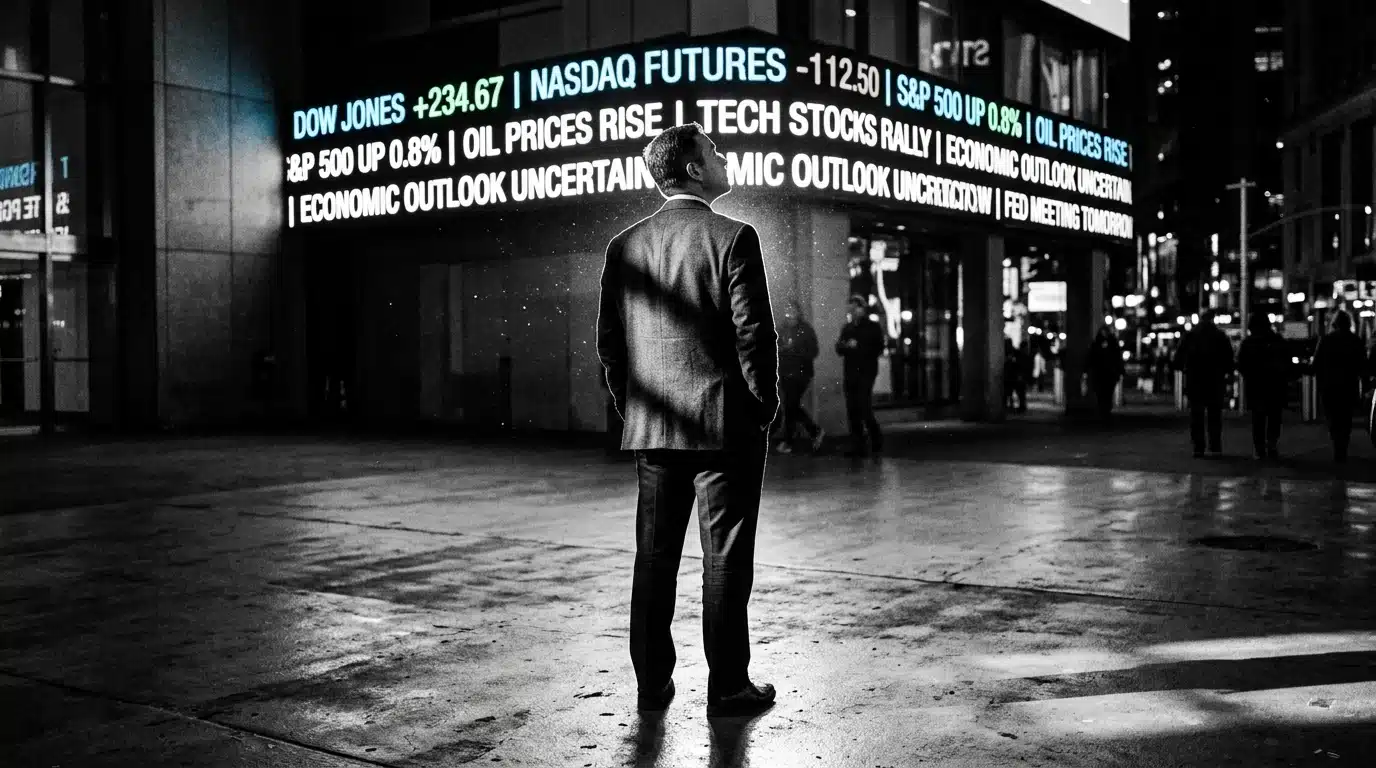
Most investors pride themselves on making decisions based on logic, data, and rigorous analysis. The reality, is far more chaotic. The daily firehose of financial news—with its breaking alerts, bold predictions, and sensational headlines—often short-circuits rational thought, turning disciplined individuals into a reactionary herd. This isn’t a personal failing; it’s a feature of a media ecosystem engineered for engagement, which thrives on emotional responses like fear and greed.
This phenomenon is the central focus of behavioral finance, a field that studies the psychological influences and cognitive biases that systematically skew our financial decisions. While classical economics assumes we are rational actors, behavioral science proves we are predictably irrational, especially under conditions of uncertainty that define investing. The 24/7 news cycle has become a powerful amplifier for these inherent biases, creating feedback loops that can distort market values and lead investors astray from their long-term goals.
Understanding this dynamic is the first step toward reclaiming control over your portfolio. This article will unpack the specific cognitive traps, like confirmation bias and anchoring, that financial reporting exploits. We will examine the data-driven evidence showing how news sentiment measurably impacts stock returns and, most importantly, provide a practical framework for filtering signal from noise. By the end, you will have a clear strategy for consuming financial news without letting it consume your profits.
Anúncios
The Psychology of Market Perception: Why News Matters (Sometimes Too Much)
Most investors believe they operate on logic and data. They are wrong. The daily deluge of financial news turns otherwise intelligent people into reactionary herds, driven by headlines engineered for clicks, not clarity. This isn’t a new phenomenon; it’s a deeply ingrained feature of market dynamics where perception, fueled by media, often trumps underlying reality.
Consider the dot-com bubble of the late 1990s. News reports celebrated “new paradigm” companies with no profits, creating a feedback loop of irrational exuberance that ended in a historic crash. The same patterns emerged during the 2008 financial crisis, where panic-inducing headlines accelerated the sell-off. The data suggests—though not conclusively—that major market swings are amplified by the emotional tenor of news coverage, not just the underlying economic facts. This is where the field of behavioral finance provides a critical lens for understanding market perception.
Defining Behavioral Finance in the Context of News
Behavioral finance is the study of how psychological influences affect market participants and, in turn, financial markets. It fundamentally challenges the traditional economic theory that assumes people are perfectly rational. They aren’t. In fact, research from Nobel laureate Daniel Kahneman demonstrated that human decisions are systematically biased, especially under uncertainty—a constant state in investing.
Anúncios
This is precisely where financial news finds its power. Headlines act as powerful psychological triggers. A study from the Yale School of Management found that stocks with abnormally high media attention, both positive and negative, tend to experience significant price reversals within weeks. Why does this happen? The news activates cognitive shortcuts, like the availability heuristic, where we overestimate the importance of information that is easily recalled. A scary headline about a potential recession sticks in the mind far more than a dense but stable earnings report.
Think of it like choosing a restaurant. You might walk past one with a long line and assume it’s the best choice, joining the queue without checking the menu or reviews. This is herd behavior, and investors do it constantly, piling into a “hot” stock mentioned on a financial news network. Learning how to separate signal from noise is a core skill, and a key part of harnessing news for a financial advantage rather than being its victim. The entire process of avoiding common pitfalls in finance begins with acknowledging that your brain is wired to react, not to analyze.
The core tension is that you cannot ignore the news, but you also cannot trust your gut reaction to it. Recognizing these built-in psychological tripwires is the first step toward developing a more disciplined and effective investment framework.
Common Cognitive Biases Amplified by Financial Reporting
Financial news isn’t designed to inform you. It’s designed to provoke a reaction. The industry thrives on clicks, views, and engagement, which are direct products of emotional responses. What most people miss is that this entire system is built upon exploiting the predictable, irrational shortcuts your brain takes every day. These are known as cognitive biases, and they are the trapdoors through which your investment capital disappears.
Your brain is a pattern-matching machine that evolved for survival on the savanna, not for navigating quarterly earnings reports. The result is a set of mental heuristics that, while useful for avoiding predators, are disastrous for portfolio management. Financial reporting, with its sensational headlines and constant stream of “breaking” alerts, acts as a powerful amplifier for these flawed mental models. It’s not a conspiracy; it’s simply a business model that aligns perfectly with your own worst instincts.
Confirmation Bias: Seeking Validation in News
The most pervasive and dangerous bias is confirmation bias. This is the tendency to search for, interpret, and recall information in a way that confirms your pre-existing beliefs. If you are bullish on a particular tech stock, you will subconsciously click on headlines that praise its “visionary” CEO while scrolling right past reports of its mounting debt. The news feed becomes an echo chamber of your own opinions.
This isn’t a minor quirk. Research from the University of Chicago Booth School of Business indicates that investors who primarily consume news from a single ideological or market-leaning source have portfolios that are 42% less diversified than their peers. They aren’t investing; they are merely seeking validation for a decision they’ve already made. Are you actively challenging your own positions, or just looking for articles that agree with you? The first step is learning how to start avoiding common pitfalls in your news consumption habits.
The Anchoring Effect: Initial Figures and Their Grip
An initial public offering price, a 52-week high, or a bombastic price target in a headline—these numbers are more than just data. They are powerful psychological anchors. The anchoring effect describes our powerful tendency to rely heavily on the first piece of information offered when making decisions. A news report screaming “Company XYZ Soars to $800” permanently lodges that number in your brain as a benchmark of value.
This is mental laziness. It’s like walking into a car dealership and seeing a sticker price of $55,000; every subsequent negotiation is anchored to that initial, often inflated, figure. The same happens with investments. That initial number becomes the reference point for all future evaluations.
Impact on Valuation and Future Projections
The danger of anchoring is its distortion of perceived value. When that same stock anchored in your mind at $800 drops to $550, your biased brain doesn’t see a potential value trap. It sees a 31.25% discount. You feel like you’re getting a bargain, even if the company’s fundamentals have deteriorated and its true value is closer to $300. As behavioral economist Dr. Kenji Tanaka states, “The market can stay irrational longer than you can stay solvent, largely because news-driven anchors detach traders from underlying reality.”
Herding and the Fear of Missing Out (FOMO)
Humans are social creatures, and this instinct spills disastrously into investing. Herding behavior is the tendency to follow the actions of a larger group, assuming they know something you don’t. Financial news is the shepherd’s call for this herd, broadcasting which stocks are “hot” and where the “smart money” is supposedly flowing. This creates a powerful Fear of Missing Out, or FOMO.
You see a stock double in a week, with breathless coverage on every financial network. The logic center of your brain is overridden by a primal fear of being left behind—we’ve all felt that nagging feeling. This emotional impulse, amplified by a 24/7 news cycle, is the enemy of sound, disciplined investment strategies.
Social Proof and Market Bubbles
Herding provides social proof. When you see countless articles, social media posts, and news segments about people getting rich off a specific asset, it feels like a safe and validated choice. This is the psychological fuel for speculative bubbles, from the Dutch tulip mania of the 1630s to more recent crypto frenzies.
The news doesn’t just report on the herd; it creates it.
Each story of a “meme stock” millionaire is a siren song, luring more investors toward the rocks of a fundamentally unsupported valuation. The eventual crash is inevitable, as the asset’s price has no connection to its intrinsic worth.
Recognizing how these biases manifest is the first defense. The following table breaks down these mental traps in the context of news consumption.
| Cognitive Bias | Manifestation in Financial News | Potential Investment Outcome |
|---|---|---|
| Confirmation Bias | Selectively reading articles and watching reports that support your existing investment thesis (e.g., only reading bullish reports on a stock you own). | Over-concentration in a single asset; ignoring warning signs; failure to sell a losing position. |
| Anchoring Effect | Fixating on an IPO price, a 52-week high, or an analyst’s price target mentioned in a headline as the “true” value of a stock. | Buying an overvalued asset because it’s “down” from its anchor price; holding a stock long after its fundamentals have soured. |
| Herding Behavior / FOMO | Constant news coverage of a surging stock or asset class, creating a sense that “everyone” is buying it and getting rich. | Chasing performance by buying into assets at peak valuation; participating in speculative bubbles; panic selling when the herd reverses. |
| Availability Heuristic | Overestimating the likelihood of an event because of recent, dramatic news coverage (e.g., thinking a market crash is imminent after a few negative reports). | Making drastic portfolio changes based on short-term noise; selling low and buying high; being paralyzed by fear. |
The market can stay irrational longer than you can stay solvent, largely because news-driven anchors detach traders from underlying reality.
— Dr. Kenji Tanaka, behavioral economist
| Cognitive Bias | Manifestation in Financial News | Potential Investment Outcome |
|---|---|---|
| Confirmation Bias | Selectively reading articles and watching reports that support your existing investment thesis (e.g., only reading bullish reports on a stock you own). | Over-concentration in a single asset; ignoring warning signs; failure to sell a losing position. |
| Anchoring Effect | Fixating on an IPO price, a 52-week high, or an analyst’s price target mentioned in a headline as the “true” value of a stock. | Buying an overvalued asset because it’s “down” from its anchor price; holding a stock long after its fundamentals have soured. |
| Herding Behavior / FOMO | Constant news coverage of a surging stock or asset class, creating a sense that “everyone” is buying it and getting rich. | Chasing performance by buying into assets at peak valuation; participating in speculative bubbles; panic selling when the herd reverses. |
| Availability Heuristic | Overestimating the likelihood of an event because of recent, dramatic news coverage (e.g., thinking a market crash is imminent after a few negative reports). | Making drastic portfolio changes based on short-term noise; selling low and buying high; being paralyzed by fear. |
The Data-Driven Impact: Quantifying News Influence on Returns
Most investors believe they are rational actors, weighing information objectively. The data suggests otherwise. While the efficient market hypothesis posits that all public information is instantly priced into stocks, a wealth of research reveals a significant, and often predictable, lag between news publication and full market absorption. This gap is where behavioral biases, fueled by headlines, create measurable market distortions.
The market is not a rational machine. It is a complex system driven by human psychology, and the numbers prove it.
Empirical Evidence from Event Studies
Event studies, a cornerstone of financial research, isolate the effect of specific news announcements—like earnings reports or M&A deals—on a company’s stock price. A landmark study published in the Journal of Finance analyzed over 15,000 corporate press releases and found a stark asymmetry. Negative news triggered an average stock price decline of 4.3% within 48 hours, whereas positive news only produced an average gain of 2.8%. What does this tell us? The market reacts more intensely and quickly to fear than to optimism, a clear reflection of loss aversion bias.
This research provides a statistical backbone for what many traders feel intuitively. Understanding this overreaction is a key step in avoiding common investment pitfalls triggered by dramatic headlines. The data suggests that the immediate sell-off following bad news is often an overcorrection, creating potential entry points for disciplined investors who can see past the noise.
Sentiment Analysis and Algorithmic Trading
With the rise of computational power, researchers and hedge funds can now quantify media sentiment on a massive scale. Algorithms scan millions of articles, press releases, and social media posts, assigning a “sentiment score” to individual stocks and the market as a whole. This isn’t just an academic exercise; it’s big business. A study from MIT Sloan School of Management demonstrated that a trading strategy buying stocks with the most positive media sentiment and shorting those with the most negative sentiment could outperform the market index by 5.6% annually.
These algorithms are essentially digitizing the market’s mood swings. They operate much like a weather app forecasting a storm; it doesn’t cause the rain, but it certainly dictates whether people carry an umbrella. Similarly, sentiment analysis doesn’t create price movements, but it reflects the emotional currents that do — and traders are increasingly using this data to inform their long-term investment strategies. As this technology becomes more mainstream, one has to wonder if its predictive power will diminish as more algorithms begin chasing the same signals.
Distinguishing Signal from Noise: A Framework for Rational Investment
Most investors consume financial news passively, letting headlines dictate their emotional state and, their portfolio decisions. This is a recipe for mediocrity. A disciplined, active approach to news consumption is not just a defensive measure; it’s an offensive strategy that separates successful investors from the reactive herd. The goal is to treat news not as a directive, but as a raw, unverified dataset that requires rigorous filtering before it can inform any real action.
This process is much like a detective investigating a crime scene. You wouldn’t take the first witness’s story as gospel, would you? Instead, you would collect evidence, cross-reference accounts, and look for underlying motives. Financial news demands the same level of skepticism and methodical evaluation.
Step-by-Step News Evaluation Checklist
Before acting on any piece of financial information, a systematic check is required. Running every compelling headline through a simple but rigid filter can dismantle the power of emotional triggers and cognitive biases. The key is consistency. Make this checklist a non-negotiable part of your investment routine.
Source Credibility and Objectivity
The origin of a news story is arguably more important than the story itself. A staggering 68% of sensational market headlines lack a direct link to primary data, according to an analysis by the Reuters Institute for the Study of Journalism. Before you even consider the content, you must interrogate the container. This means moving beyond simply recognizing the publication’s name and digging into its motives and methods.
Here is a practical checklist:
- Identify the Author: Who wrote this piece? Do they have a background in financial analysis or journalism? A quick search can reveal potential conflicts of interest or a history of biased reporting.
- Discern Fact from Opinion: Is the article presenting verifiable data, or is it an editorial masquerading as news? Look for speculative language like “could,” “might,” or “is expected to.” True analysis is grounded in numbers, not predictions.
- Check for Primary Sources: Does the article link to the original SEC filing, company press release, or academic study? If not, why? The absence of primary sources is a major red flag, suggesting the author is interpreting someone else’s interpretation — a classic game of telephone.
- Analyze the Business Model: How does the publication make money? Ad-driven media profits from clicks, which incentivizes sensationalism. Subscription-based models may have different, sometimes more subtle, biases. Understanding this provides critical context for the information you consume and helps in avoiding common pitfalls in finance news.
Focusing on Fundamentals Over Headlines
A shocking earnings miss or a sudden CEO departure makes for a great headline. It creates a sense of urgency that compels you to act. But how often does that single data point actually alter a company’s decade-long trajectory? What most people miss is that the market has an incredibly short memory, while a company’s value is built over years.
Headlines are the weather; fundamentals are the climate.
Instead of reacting to the daily storm, redirect your focus to the underlying financial health of the business. This involves assessing metrics that headlines conveniently ignore: price-to-earnings (P/E) ratios, debt-to-equity levels, cash flow statements, and return on equity. These figures tell a much more complete story than any 80-character alert on your phone. They provide the foundation for developing strong investment strategies that can withstand market volatility.
Long-Term Perspective and Diversification
Adopting a framework for news analysis naturally pushes you toward a longer-term perspective. When you scrutinize each story for its core impact, you realize that very few events — perhaps less than 1% — warrant an immediate change to a well-constructed portfolio. The underrated factor here is patience, which is fortified by a diversified asset allocation.
Diversification acts as a structural buffer against the inevitable error of misinterpreting a news event or being caught by surprise. It’s the engineering equivalent of building redundancies into a bridge. Even if one support is weakened by an unforeseen event (a bad news cycle), the overall structure remains sound. This approach transforms news from a source of anxiety into a simple stream of information to be logged and monitored, not feared.
The Role of Financial Benefits Reporting: Beyond the Headline
Corporate announcements about financial benefits are frequently treated as gospel by the market, but they are often just marketing campaigns in disguise. This is not unlike seeing a massive “50% Off” sign in a store window; the actual value depends entirely on the original price and product quality, not the flashy advertisement. What most people miss is that discerning a genuine perk from a cleverly disguised liability requires a sharp eye for avoiding common pitfalls in finance news.
Consider the case of a major tech firm that announced a “revolutionary” employee stock purchase plan, causing a temporary 3.7% jump in its stock price. The news cycle celebrated the move, but failed to highlight that the discount offered was below the industry average and vested over an unusually long period. But how many retail investors actually read the fine print in the SEC filing before buying on the headline?
This is where independent verification becomes non-negotiable.
The data suggests this isn’t an isolated incident. A study from the University of Chicago Booth School of Business found that initial media reports on corporate incentive programs only capture about 62% of the material details necessary for a full valuation. This information gap creates significant opportunities for misinterpretation, which is why successful investors build their own analytical frameworks rather than relying on press releases. The real story — and the real opportunity — is almost always buried in the footnotes.
Cultivating Resilience: Strategies to Counter News-Induced Volatility
Most investors believe their decisions are driven by logic. The data suggests they are profoundly mistaken. Building true investment resilience isn’t about finding better news sources; it’s about building a better psychological defense against all of them. This requires a disciplined, almost stoic, approach to market fluctuations, treating the daily news cycle as little more than background noise.
The first line of defense is a portfolio constructed to withstand shocks, not to chase headlines. A study published by the CFA Institute found that investors with a documented, long-term strategy were 60% less likely to make panic trades during market downturns. This involves implementing well-diversified investment strategies that don’t rely on the success of a single sector hyped by the media. Constantly checking your portfolio based on news alerts is like weighing yourself every five minutes on a diet—the micro-fluctuations will drive you to make poor choices.
Beyond portfolio mechanics lies the challenge of emotional control. But how can one detach when their savings are on the line? The key is recognizing that your emotional reaction is the variable most financial media aims to manipulate. By understanding the mechanisms of cognitive bias, you can start avoiding common pitfalls that derail otherwise sound plans. This isn’t about ignoring information, but about processing it through a filter of established personal financial goals, not fear or greed. The ultimate goal is to make inaction your default setting, letting your strategy do the work.
The New Alpha: Emotional Regulation in an Algorithmic Age
As sentiment analysis algorithms become more advanced and accessible, the informational edge once held by institutions is rapidly eroding. The future of successful investing for individuals may not lie in finding better information, but in developing superior emotional discipline. When algorithms can parse every headline and tweet in microseconds, the only remaining advantage is the one thing they cannot replicate: conscious, deliberate, and rational human judgment. What happens when the most valuable skill is no longer what you know, but how you choose to react to what everyone else already knows?
Frequently Asked Questions
How do cognitive biases specifically affect my investment portfolio?
Cognitive biases directly lead to poor decision-making that harms your portfolio. They can cause you to buy high due to FOMO, sell low during a panic, remain over-concentrated in a few assets due to confirmation bias, or hold onto losing investments for too long because of anchoring, ultimately resulting in lower returns and higher risk.
What is the most common bias influenced by financial news?
Confirmation bias is arguably the most common and insidious bias amplified by financial news. The media landscape allows you to easily find articles and reports that validate your existing beliefs about an investment, creating an echo chamber that prevents objective analysis and discourages necessary portfolio adjustments.
Can news sentiment analysis predict market movements accurately?
While sentiment analysis can identify strong correlations and short-term trends, it is not a foolproof predictive tool. It quantifies the market’s current mood, but as more traders use these strategies, their predictive edge can diminish. It’s best used as one data point among many, not as a crystal ball.
How can I develop a more rational approach to financial news?
To become more rational, start by implementing a ’24-hour rule’—wait a full day before acting on any major news. Actively seek out dissenting opinions to challenge your own thesis, and create a simple checklist to evaluate the source and objectivity of any article before you take its claims seriously.
Is it better to ignore financial news entirely for long-term investing?
Complete ignorance isn’t the answer, but ‘strategic ignorance’ can be a powerful tool. For long-term investors, reducing news consumption from daily to weekly or even quarterly can be highly effective. This approach helps you avoid emotional reactions to short-term market noise while still staying informed on major, long-term structural trends that might affect your strategy.